Lessons from a Lost Dog
It never ceases to amaze me what we can learn from observing animals.
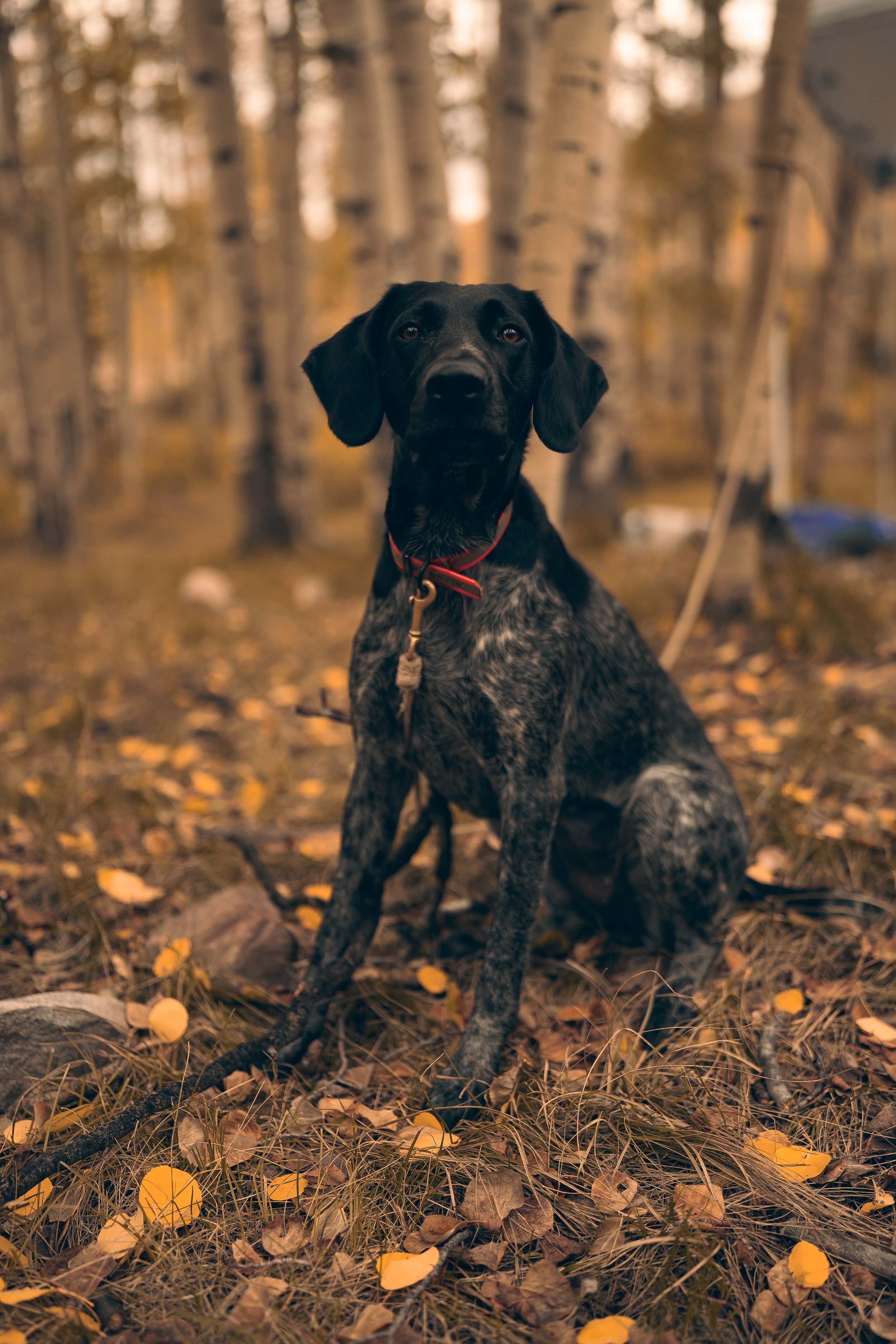
A few weeks ago we were at an event in Park City, and we had one of our dogs with us, Maggie, a one-year-old wirehaired pointer with endless energy. While we were on the mountain, she got away from the kind person who was walking her. If you've ever had a young pointer, this won't surprise you.
It was heartwarming to witness how many people stepped up to help us find her. Strangers, friends, people who understand what a dog means to the person who loves her.
She took off at 2:30 pm. By the time I was coming down from the mountain at 5:30, someone had spotted her in a neighborhood. People saw her, called her name and every time they did, she ran. We hoped she'd come to me or Chris.
For hours we heard about sightings but couldn't get close. Then we figured out her pattern: she was running between two places she and Chris had been together - a house nearby, and a field where they played ball. I was within fifty feet of her, calling her, and she bolted the other direction.
That's when the lesson arrived. One I've had to learn the hard way many times. If you want something, don't chase it. Let it come to you. Attract it with trust and safety.
I remembered a story my massage therapist once told me and the many versions of it I've had with clients and at retreats over the years.
So we stopped chasing. We set up her kennel, her food, her water. We waited, watching from a distance. Her behavior was fascinating. She sat high, observing the situation. She circled the area. And then, at 9 p.m., when thunder cracked, she came cautiously to the truck and climbed into her kennel on her own.
The next morning I learned about dogs in flight-or-fight mode. Under that level of stress, they can lose the ability to recognize their owners. Their only instinct is to stay out of danger. So every human calling their name, offering treats, or chasing them reads as a threat. The instinct is to run. That's exactly what she did.
But when she found her kennel and her food, something shifted. She recognized safety, comfort, and trust.
We are animals too. And we respond in a lot of the same ways.
The Snake in the Basket
There's an old story yoga teachers tell.
A snake charmer captures a large, venomous snake and puts it in a tightly woven bamboo basket. The snake is furious. It thrashes against the walls with everything it has and the bamboo holds. It stays captured, exhausted, weak, and hungry.
Then the charmer drops a live mouse into the basket.
Normally the snake would strike instantly. But this time it does something different. It coils into a perfect, unmoving circle in the corner and simply watches.
The mouse, terrified at first, freezes. But as the hours pass and the snake doesn't move, the mouse grows brave. Seeing no way out, it starts doing what mice do, gnawing at the bamboo.
The snake doesn't interfere. It doesn't hiss. It doesn't shift. It waits while the mouse chews a hole just large enough to squeeze through.
And in the moment the mouse tries to slip out to freedom, the snake strikes - eats the mouse, and slides out through the very hole the mouse made.
That's the whole story: stillness, then the opening.
The Human Experience
The snake in the basket did the exact opposite of what most of us do.
When we're under pressure - money, work, a relationship, a decision we can't force - we thrash. We push. We chase the thing we want, and we exhaust ourselves against a wall that isn't moving. Like the dog, we live in stress, constantly running on fear.
Our nervous system is wired for it. Under stress, cortisol and adrenaline spike, the thinking brain goes quiet, and the emotional center takes over. That response was designed to get you away from danger, a short burst, then done. It was never designed for a season of forcing something that isn't ready to yield.
Stay in that mode for months and it shows up as:
Exhaustion that sleep doesn't fix
Inflammation, disrupted sleep, a body that feels inflamed and tired
Tunnel vision, so focused on forcing the closed door that you never see the open window right beside it
Extra weight carried just in case
Impulse decisions that feel urgent and turn out wrong
And underneath all of it, the thing that's actually keeping you stuck: the belief that constant action is the same thing as progress.
What Stillness Actually Gives You
When you step out of the fight and into the witness, when you stop chasing and start observing, several things happen at once.
Your body recovers. Heart rate drops. Cortisol clears. Inflammation settles. You stop spending your life force on walls that were never going to move.
Your intuition gets loud enough to hear. The snake could only see the escape route because it was perfectly silent. Panic is not a good listener. When you quiet it, your inner voice can finally tell you the thing you've been too busy to hear, whether to wait, or whether to strike.
The situation moves without you. Often, if you stop interfering, the mouse chews the hole. Timing, other people, circumstance - things you couldn't have forced start to align. It looks like luck. It's the reward of strategic stillness.
True power isn't how hard you struggle. It's knowing how to stay perfectly still until the opening appears.
Sit With These
Before you do anything else, give yourself ten quiet minutes. No phone, no fixing, no figuring it out. Just these questions.
1. What have I been chasing?
Not the surface answer, the honest one. A person, a result, a version of myself, a yes I keep trying to earn.
2. Where in my life am I living like Maggie, running from the people calling my name?
3. Where am I living like the snake before the stillness, thrashing against a wall that isn't moving?
4. What am I exhausted from?
5. What would it look like to create a safe place for the thing I want, instead of chasing it?
Not a passive place. A real one - with food, water, and shelter. Where would you build it?
6. What is my body holding onto just in case?
7. What would I feel if I trusted, for one week, that things come when they're allowed to?
If You're Tired of Running
If you read this and recognized yourself, if you're the one always pushing, always chasing, always braced for what's next, you don't have to keep living that way.
Your body can release fear. It can learn to run on trust and safety instead. That's not a philosophy. It's physiology. And it's work you can actually do.
Ways to work with Emilee