
The Empty Room
What if the space we fear most is the space where possibility begins?
I recently attended a women's mastermind that I'm part of. We often begin our gatherings by pulling a card from a tarot deck. Sometimes, much like reading a horoscope, you feel as though someone wrote it specifically for you. Other times, you wonder if your sign got a little confused. ;-)
This week, mine was spot on.
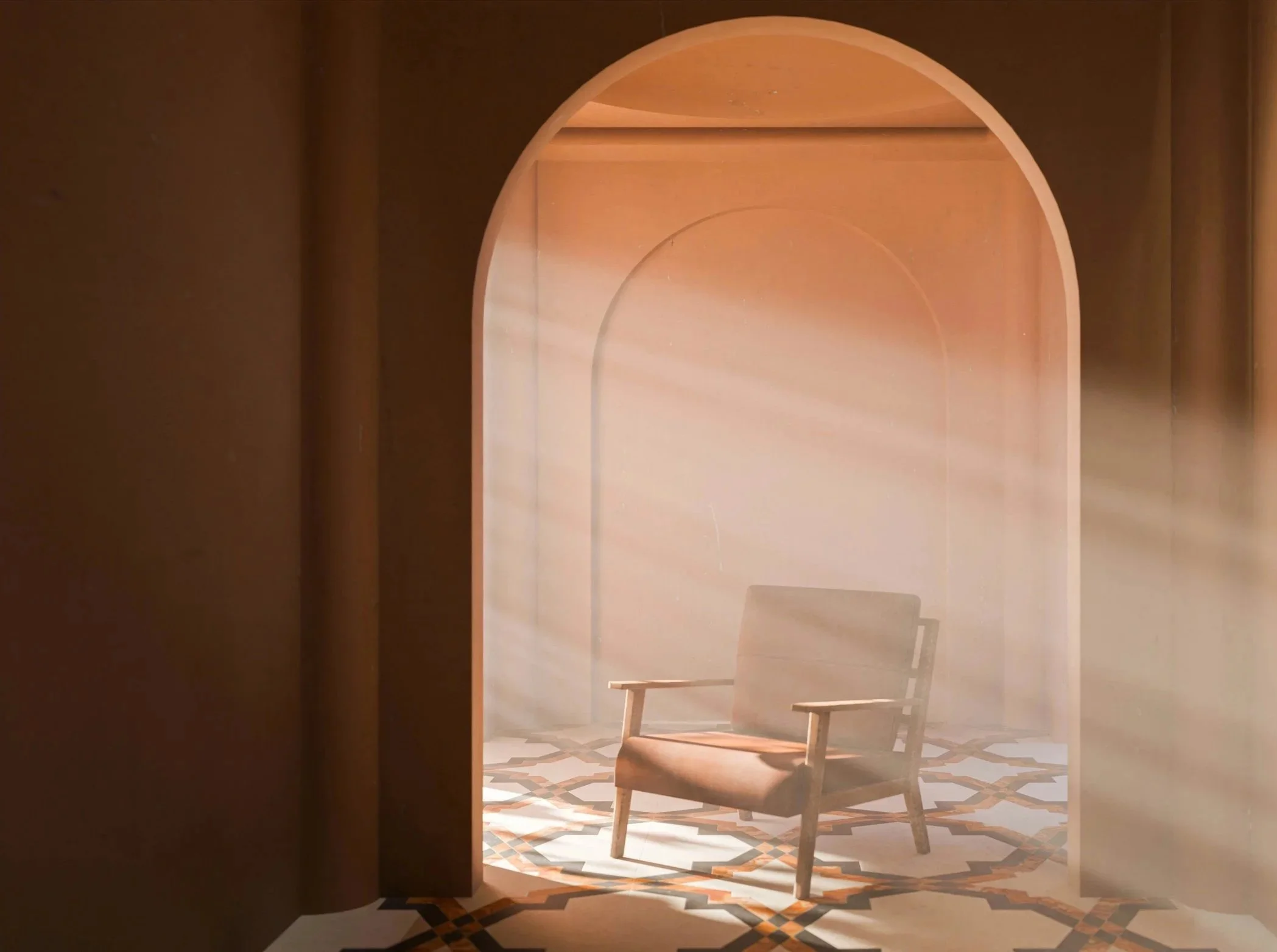
For those unfamiliar, tarot cards have been around for centuries and are often used as a tool for reflection, intuition, and self-discovery. There are countless decks, each with its own imagery, interpretations, and perspectives.
The card I pulled was called The Empty Room.
At first glance, it felt dark. Lonely. Almost depressing.
But given what had transpired in my life over the previous few days, it also felt incredibly timely.
On a very literal level, I thought about my children growing up, moving out, and moving on. The empty nest that so many women anticipate, fear, or are already learning to navigate.
But the longer I sat with the card, the more I realized that empty rooms show up in so many different ways.
I thought about the women I work with who feel lost when their children no longer need them in the same way.
The people I know who identify as workaholics, who feel they aren't enough unless they're producing, achieving, or accomplishing something.
The friends and family who struggle with downtime because doing nothing feels like wasting time.
And those of us who fill every quiet moment with friends, social media, television, or endless activity because being alone with our thoughts can feel uncomfortable, even scary.
We are so quick to fill the empty spaces in our lives. But what are we actually trying to fill?
That question took me somewhere deeper.
I haven't spoken much about my divorce in this space, but this card brought me back to the early days when my children would leave to spend time with their dad.
I remember how difficult those empty rooms felt. The silence in the house. The absence of the everyday noise and activity that had become such a part of my identity. The activities and conversations I was missing out on.
My heart felt empty, and I often found myself searching for ways to fill that hole.
But beneath the loneliness was a much bigger question.
Who am I when I'm not actively being their mother?
Who am I if I'm not a daughter, coach, spouse, or athlete?
Who am I when there's nothing to do, no one to care for, nothing to accomplish, and no role to play?
It's amazing how much can surface from simply looking at a card.
Every tarot deck comes with a book that offers a deeper interpretation of the cards. When I opened mine, this is what I read:
"The Empty rooms haunts us all. it is the universal and all too frequent feeling of lack, of wanting, of the craving to fill ourselves with something, anything we too often attempt to remedy the discomfort of The Empty Room by any means necessary, leading us toa culture of more. Ironically, The Empty Room is filled to the brim with potential, yet we perceive it as not enough. This card is a cry for patience, for sitting within the barren walls of the not knowing. For awaiting true vision and purpose before attaching to what we should do next to save our outward appearance. Be with the nothingness. Be with the impatience. The Empty Room has immense power. Let others wonder what you are doing. If you can settle in the magic of emptiness, you will soon hear its whispers of wisdom. "
I read it more than once.
What struck me most was the idea that the room isn't actually empty. It's filled with potential. Yet our minds are so conditioned to see what's missing that we overlook what's possible.
We see the loss before the opportunity.
The absence before the freedom.
The uncertainty before the possibility.
And perhaps that's where our work begins.
The health connection: Your body is listening
You know I can't resist bringing a little science into these conversations because our emotional and physical health are never separate.
When we continually operate from a place of lack, feeling we're not enough, don't have enough, or need to do more to be worthy, we can keep ourselves in a heightened state of stress.
Our nervous system doesn't only respond to physical threats. It also responds to perceived threats, uncertainty, and ongoing emotional stress.
When that stress becomes chronic, the body can spend more time activating its stress-response systems, including cortisol and the sympathetic nervous system. Over time, this can contribute to changes in sleep, blood pressure, immune regulation, metabolism, and inflammation.
Scientists call the cumulative wear and tear of prolonged stress allostatic load.
And here's the interesting part.
Research has also found that optimism, positive emotional well-being, and a greater sense of life satisfaction are associated with better cardiovascular health and, in some studies, greater longevity.
This doesn't mean we can think ourselves healthy or that feeling sad, lonely, or uncertain is harmful in itself. Those emotions are part of being human.
It means that the way we repeatedly experience and respond to our lives can influence our physiology.
When we begin to feel safer, more connected, more hopeful, and less consumed by what is missing, we may create more opportunities for our bodies to recover from stress.
Perhaps living in the light isn't just about feeling better emotionally. It's also about creating conditions that better support our physical health.
And that, to me, is where science meets soul.
Choosing to see the light
After some journaling, conversations, and meditation, I've decided to look at my own empty room differently.
Instead of seeing it as something missing, I'm choosing to fill it with light, love, curiosity, and possibility.
I'm taking my own advice from a few weeks ago and allowing myself to sit in the stillness long enough to see what arises.
To stop forcing answers.
To allow things to come toward me rather than constantly chasing them.
To be more intentional about where I place my energy, especially in relationships and situations where that energy may not be wanted, received, or reciprocated.
I've spent plenty of time giving energy to things I fear, situations I cannot control, and moments when I desperately want to be understood or be right.
And I've been asking myself what might happen if I redirected that same energy toward what I actually want to grow.
More connection. More creativity. More love. More joy. More peace.
I believe energy follows intention. And while I can't control everything that happens around me, I can become more conscious of what I give my attention to and how I choose to respond.
That doesn't mean ignoring what's difficult or pretending everything is wonderful.
It means acknowledging the hard things without allowing them to occupy every room in my life.
The room doesn't have to change for the light to change. Sometimes it's our perspective that opens the windows.
And perhaps when we stop trying so hard to fill the emptiness, we finally create room for the people, experiences, and opportunities that truly align with who we are becoming.
A little practice for you
This week, I invite you to explore your own empty room.
Find 10 minutes of quiet. No phone, no distractions, no agenda. You might journal, meditate, take a walk, or simply sit.
Consider these three questions:
Where in my life am I experiencing a sense of emptiness or lack? Is there an area where I'm telling myself I'm not enough, doing enough, or have enough?
How am I trying to fill that space? Am I staying busy, overworking, overgiving, scrolling, seeking validation, or trying to control an outcome rather than allowing myself to feel what's there?
What becomes possible if I stop seeing this space as something missing? What might I want to invite into my life, and where would I like to place more of my energy and attention?
And then, perhaps the hardest part.
Don't rush to do anything with your answers.
Just sit with them.
Give yourself permission not to know what's next.
Because sometimes the most meaningful growth happens when we stop trying to fill every space and allow ourselves to simply be.
An empty room isn't necessarily a sign that something is missing. It may be a sign that something new has room to enter.
With love,
Emilee
