
You Are What You Eat...
And What You Think
When I started studying nutrition in 2015, it was because I wanted to heal myself first. And then, like so many things we experience deeply for ourselves, I wanted to share that with others.
I saw what food could do. I felt the impact of nourishment in my own body. And I wanted everyone to know how to use food to support healing from the inside out. I still love this work, and I live it daily.
For years, I used a slide in some of my presentations that said: You Are What You Eat, and it looked something like this.
And that is true.
Your body uses the food you give it to fuel itself, repair damage, create energy, and continuously build cells, bones, blood, hormones, and tissue. What we eat matters, always building from what we give it.
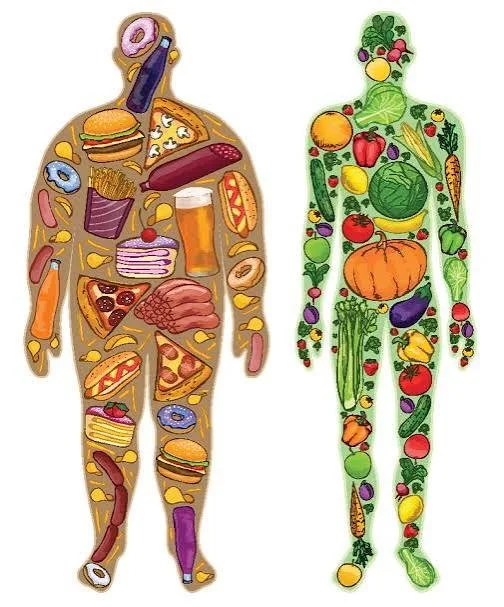
“You Are What You Eat” slide
But early on, I started noticing something else.
Even when I was doing all the "right" things - eating for my body, exercising, sleeping - I was still suffering. I felt overwhelmed. I felt like I was not enough. I was reacting to life instead of creating it.
Deep down, I knew my nutritional changes had helped heal my gut as much as they could. The rest was mental and emotional work. I knew that as long as I carried certain beliefs about myself and about life, my body was going to continue reflecting that stress.
Because you are not only what you eat.
You are also what you think.
That has become such an important part of the work I do with clients. We work on both, because they are connected. The food you eat matters, yes. But so do your thoughts, your patterns, your emotions, your beliefs, and your nervous system.
Each one affects the other.
We are a system. Everything in the body is connected. And not only to ourselves, but to the people and energy around us too.
I have found, over and over again, that changing behaviors, thought patterns, and emotional responses is often much harder than simply changing what is on your plate. But if we do not address the thought patterns, it is hard to fully change the plate. And if we do not address the plate, it is hard to fully support the mind and body.
Two Types of Illness
Some aspects of illness begin more physiologically - in our biochemistry, digestion, hormones, nutrient status, genetics, or inflammation. And some are deeply influenced by stress, thought patterns, emotional experience, and the ways we interpret what is happening around us.
What I did not know until more recently is that there is actually a name for the study of this connection: psychoneuroimmunology.
It is the study of how our psychological processes, nervous system, and immune system interact to affect physical health.
In other words, what we think and feel does not stay neatly in the mind. It has an effect on the body.
I see this all the time.
Sometimes a client is doing so many of the "right" things and still struggles with weight loss - not because they are failing, but because their body is operating under chronic stress, self-criticism, or pressure. I see this in high performers too - people who eat well, stay active, and look healthy from the outside, yet are still dealing with blood sugar issues, high cholesterol, diabetes, and other health concerns. Cortisol plays a role here. It can raise blood sugar, and when stress is ongoing, the body is repeatedly told to release stored glucose into the bloodstream. This is one of many reminders that health is not just about what we eat, but also about the internal environment we live in every day.
Last week I have embarked on my next unit of study: Intuition Medicine. I am excited to bring more of these practices into my work with clients, retreats, newsletters, and online communities.
Something to Take with You
Notice one moment in your day when your stress tends to rise.
Maybe it's before a meeting, opening your inbox, getting in the carpool line, walking in the door after work, or having a conversation you know might ask something of you.
When you notice the stress, pause and ask:
What is coming up for me here? Pressure? Insecurity? The need to manage someone else's feelings? The fear of not doing enough?
You do not need to fix it right away. Just notice it.
That is often where the real work begins.
And if you notice your mind or your nutrition may be keeping you stuck, and you want some support, here are a few ways to work with me.